
Schley Criminal Court Records
A Schley County criminal court record is the case-level file kept once a criminal matter is opened or filed with a court. It can include the charge document, docket entries, arraignment events, bond orders, motions, plea papers, hearing notices, trial activity, verdicts, dispositions, sentencing orders, and probation terms. It is not the same as an inmate lookup, a police report, or a warrant search. For a close look at charges after arrest, use arrest records and court charges. For all case types, use Schley County court records.
Superior Court is the central criminal court for felony records in Schley County. The county says the Clerk of Superior Court files and manages misdemeanor and felony records, including warrants, accusations, and indictments. Magistrate Court is also important because Schley County's local page says Magistrate Court approves or signs all warrants and handles pre-warrant and warrant-related matters. The Sheriff's Office handles custody and jail questions, but the clerk's court file is where pleas, dispositions, and sentencing records are kept.
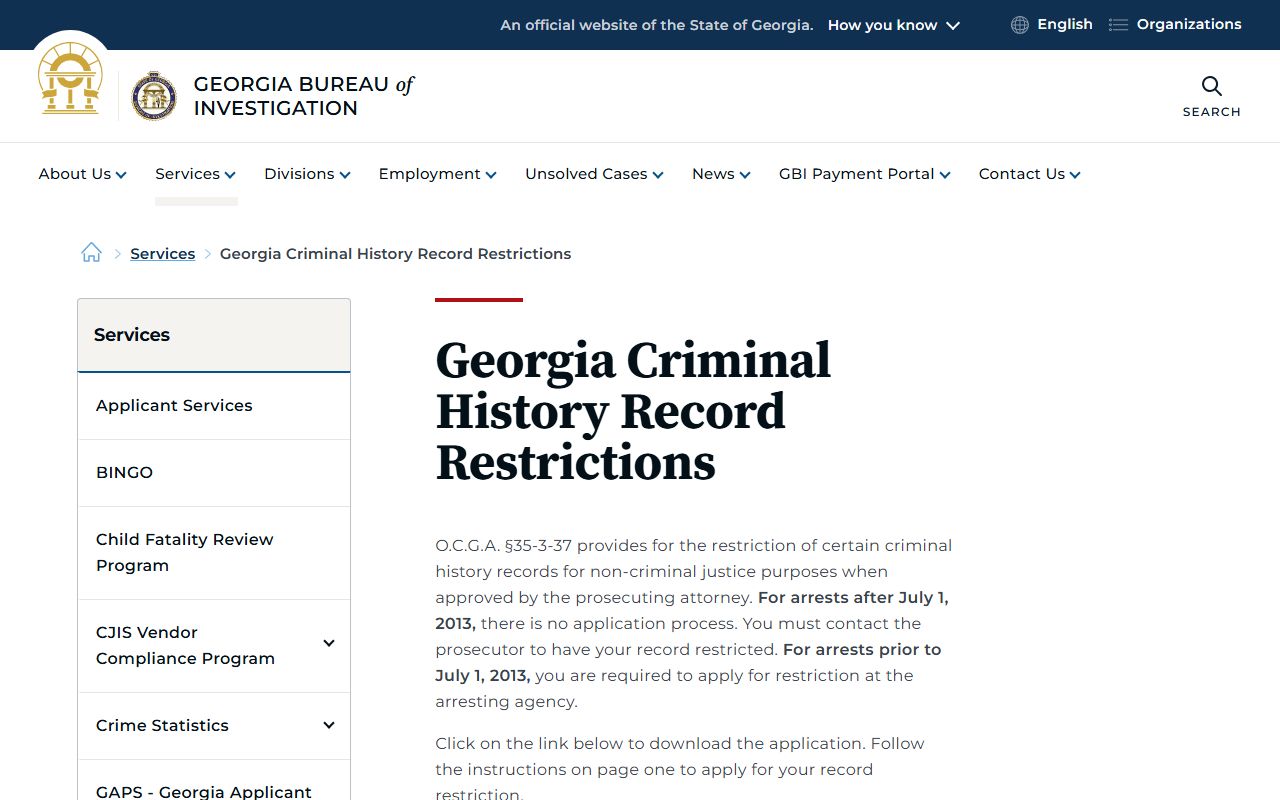
The Georgia Bureau of Investigation record restriction page is one of the assigned sources for Schley County criminal court records.
Search Schley Criminal Cases
Online access for Schley Superior criminal court records starts with the statewide Georgia Courts e-access page. That page lists Schley Superior through PeachCourt, which provides account-based access for civil and criminal e-filing and court documents across Georgia. The public PeachCourt access screen does not show case-search fields before login, so a user should not expect a no-account public search by name.
- Confirm that the matter belongs in Schley Superior Court rather than Magistrate Court, Probate traffic court, a jail custody check, or a federal case.
- Use Georgia Courts e-access to select the Schley Superior route and proceed to PeachCourt.
- Register or log in, then search with defendant name, case number, filing year, charge, accusation, indictment, or other available identifiers.
- Review the docket for arraignment, motions, plea, trial, disposition, sentence, bond, or probation entries.
- Request certified copies from the Clerk of Superior Court if the online record is incomplete or an official copy is needed.
Direct request channels remain essential. The Clerk of Superior Court can be reached at 229-937-5581 for filed criminal case records. Magistrate Court can be reached at 229-937-5110 for warrant and first-stage warrant matters. The Sheriff's Office and jail at 229-937-2101 can answer custody, surrender, booking, or bond questions, while warrant records and inmate records involve separate access paths.
Schley Criminal Case Flow
A criminal case can touch several offices before the final court record is complete. After an arrest or warrant, the jail may confirm custody. Magistrate Court may handle warrant approval and early proceedings. The Southwestern Judicial Circuit District Attorney decides or pursues formal charges by accusation or indictment. Once filed, the Clerk of Superior Court maintains the criminal case record that tracks pleas, motions, hearings, dispositions, and sentencing.
Case flow: Charges Filed › Arraignment › Pretrial / Motions › Plea or Trial › Disposition › Sentencing
| Stage | What Happens |
|---|---|
| Charges filed | An accusation, indictment, warrant filing, or other charging paper begins or advances the court case. |
| Arraignment | The defendant is formally advised of the charge and enters a plea or has a plea entered by the court process. |
| Pretrial / motions | Attorneys file requests about evidence, procedure, bond, dismissal, amendment, discovery, or trial issues. |
| Plea or trial | The case is resolved by plea, bench trial, jury trial, dismissal, or other court action. |
| Disposition | The record shows the outcome of a charge or case, such as guilty, not guilty, dismissed, or nolle prosequi. |
| Sentencing | If there is a conviction, the court records custody, probation, fines, costs, conditions, or other sentence terms. |
Schley Criminal Record Fields
No open Schley criminal case sample was available without PeachCourt account access during the research. The field list below should be treated as the expected inventory of a Georgia criminal case file based on Schley County court duties and standard court-record structure. The actual public view may omit sealed entries, redacted identifiers, or document images.
| Field | What It Shows |
|---|---|
| Case number | The court's criminal file identifier, useful for direct clerk requests and certified copies. |
| Defendant | The person accused in the criminal court case, with identifiers limited by redaction rules. |
| Charge | The alleged offense as filed by accusation, indictment, warrant filing, or amended charge paper. |
| Charging document | The accusation, indictment, complaint, or related filing that frames the court case. |
| Plea | The defendant's response, such as guilty, not guilty, nolo, or another plea entry. |
| Motions and orders | Requests by the parties and rulings by the judge during the case. |
| Disposition | The final outcome for a charge or case, including dismissal, plea, verdict, or other resolution. |
| Sentence | Custody, probation, fines, costs, conditions, or other punishment after conviction. |
| Bond information | Release conditions or bond status if the court record includes that data. |
The full case file can matter long after the hearing date. Employers, licensing boards, schools, immigration counsel, attorneys, and courts may need the final disposition or certified sentence order rather than a docket note. Casual database results can be incomplete, so use the Clerk of Superior Court for official copies.
Charges and Convictions
A charge is not a conviction. Schley County criminal court records can show charges that were later amended, reduced, dismissed, dropped, or resolved through a plea to a different count. A conviction appears only when guilt is established by plea, verdict, or other lawful adjudication. This distinction is central when reading a docket or a case summary.
| Charge | Conviction | |
|---|---|---|
| Meaning | An allegation filed or pursued in court. | A finding or plea establishing guilt. |
| Where it appears | Complaint, warrant, accusation, indictment, docket, or amended filing. | Disposition, plea form, verdict, judgment, or sentencing order. |
| Can change | Yes. It may be amended, reduced, dismissed, or nolle prossed. | It can be appealed, restricted in eligible cases, or modified only through legal process. |
| How to verify | Read the latest docket entries and charging documents. | Request the final disposition or sentence from the clerk. |
Dispositions and Sentences
Disposition language shows how the criminal case or charge ended. Common entries may include guilty plea, not guilty verdict, dismissal, nolle prosequi, dead docket, reduced charge, or sentence entered. A sentence is separate from the disposition. It records the punishment after conviction, such as custody, probation, fines, costs, conditions, community service, treatment, restitution, or other terms ordered by the court.
Schley County belongs to the Southwestern Judicial Circuit. The District Attorney for the Southwestern Judicial Circuit is Lewis R. Lamb, and the office serves Schley County from the circuit structure. The Southwestern Circuit Public Defender lists David Winheim as circuit public defender for Lee, Macon, Schley, Stewart, Sumter, and Webster Counties. These offices are part of the criminal court ecosystem, but the clerk is the record custodian for filed case papers and final court documents.
The U.S. Attorney's Office for the Middle District of Georgia is also assigned to this page because federal criminal cases from the region are separate from Schley County Superior Court cases.
Restricted Criminal Records
Georgia often uses the term record restriction for criminal-history access limits. The GBI record restriction page cites O.C.G.A. 35-3-37. It says arrests after July 1, 2013 do not use a GBI application process and instead require contact with the prosecutor for restriction. For arrests before July 1, 2013, the person must apply through the arresting agency. Some conviction restriction petitions use a court process and may be filed under seal, and the Attorney General publishes a pro se restriction petition package for eligible conviction restriction requests.
| Sealed | Restricted | |
|---|---|---|
| Basic effect | Public access to the court file or entry is limited by court order or law. | Eligible criminal-history information is limited for non-criminal-justice purposes. |
| Common source | Court order, statute, juvenile law, adoption law, or sensitive proceeding. | O.C.G.A. 35-3-37 and GBI or prosecutor-related process. |
| Who may still see it | Parties, lawyers, courts, agencies, or others allowed by law or order. | Criminal justice users may still have access when law allows. |
| Public request result | The clerk may deny, redact, or require an order before release. | The public result may omit restricted criminal-history information. |
Schley Criminal Record Access
Georgia's public-record framework supports access to court records, but it does not make every criminal file fully public. O.C.G.A. 50-18-70 states Georgia's policy of open public records, O.C.G.A. 50-18-71 covers inspection, copies, and fees, and O.C.G.A. 50-18-72 lists exemptions and redactions. The Attorney General's Open Government law page and Open Government FAQ are the main state access references in the research.
Key Statutes:
O.C.G.A. 50-18-70 supports prompt public inspection of public records unless an exception applies.
O.C.G.A. 50-18-71 allows reasonable search, retrieval, and copy costs, with no charge for the first 15 minutes under the Attorney General FAQ.
O.C.G.A. 35-3-37 governs Georgia criminal-history record restriction for eligible records.
Case Records and Checks
A Schley County criminal court record search is not the same as a regulated background check. A court file can confirm a case number, charge, plea, disposition, or sentence, but it may omit records from other counties, state repositories, federal courts, sealed matters, restricted entries, or non-court law-enforcement files. For state prison or probation custody, use Georgia Department of Corrections tools. For registered sex-offender data, use the GBI registry under O.C.G.A. 42-1-12. For federal cases, use PACER or the U.S. District Court for the Middle District of Georgia.
Important: Do not use casual criminal court lookups for FCRA-regulated employment, tenant, credit, or insurance decisions.
Schley Criminal Record Limits
Restricted Schley County criminal court records can include juvenile matters, sealed cases, eligible restricted criminal-history information, mental-health-related proceedings, and records with protected personal identifiers. Public redactions may remove Social Security numbers, bank or credit account numbers, medical information, insurance information, financial data, mother's birth name, month and day of birth, and protected address or phone data for covered officials.
For an official criminal court copy, contact the Clerk of Superior Court at 47 N. Pecan Street, P.O. Box 7, Ellaville, GA 31806, phone 229-937-5581. Office hours listed by GSCCCA are 8:00 AM-5:00 PM, closed for lunch from 12:00 PM-1:00 PM. Bring or provide the defendant name, case number if known, filing date or date range, charge, disposition date, and the copy type needed.